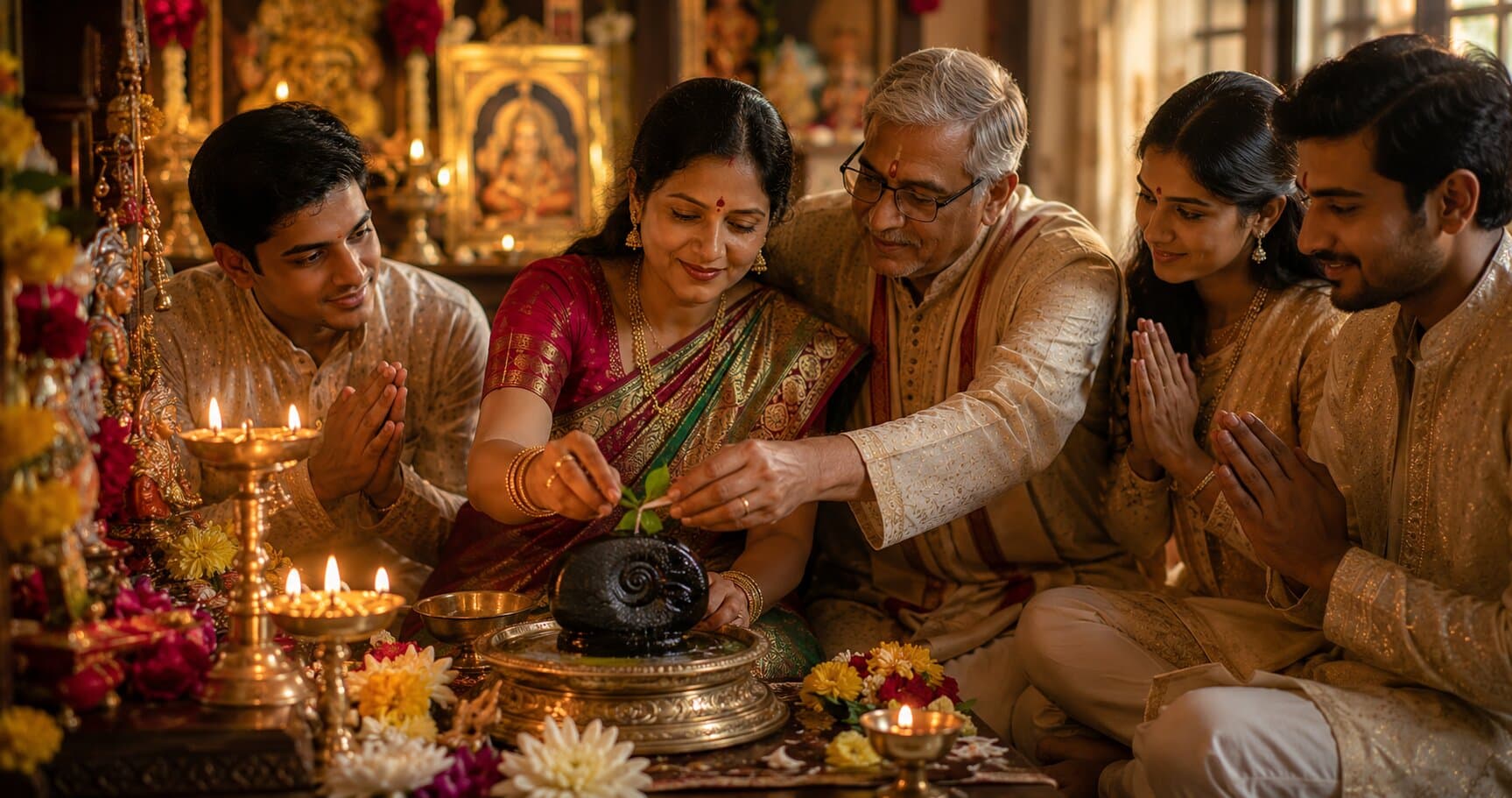
Can Women Touch Shaligram?
This is one of the most frequently searched questions about Shaligram worship, and it doesn't have a single universal answer practice varies by region, family lineage, and which Vaishnava tradition a household follows. Rather than give a single blanket answer, this article lays out where the question comes from, how practice actually varies, and how to think about it for your own household.
Where the Question Comes From
Restrictions around touching sacred objects during menstruation appear across many traditions within Hinduism, not just in relation to Shaligram the same guidance is commonly cited for temple visits and other forms of murti worship generally, and reflects broader ideas about ritual purity found across many devotional practices. Within Vaishnava households, it's common for women to worship and handle the Shaligram at other times, with the menstrual period being the specific exception cited in most traditional guidance, rather than a blanket restriction on women worshipping at all. This distinction matters, because the two get conflated fairly often in casual conversation "women can't touch Shaligram" as a general statement is a broader claim than what most traditional sources actually describe.
Regional and Family Variation
Beyond that general pattern, specifics differ quite a bit by household. Some families follow stricter observances passed down through their own lineage, extending the restriction further or applying it more conservatively. Others, particularly in many contemporary urban households, have relaxed or moved away from these restrictions entirely, treating devotion and intention as the more important factor. South Indian and North Indian households sometimes differ in how strictly certain observances are followed, and even within the same city, two families following the same broad tradition can land in different places on this question. Neither approach is universally "correct" Hindu practice has always accommodated significant regional and family-level variation, and Shaligram worship is no exception to that pattern.
How Practice Has Evolved
As with many traditional observances, attitudes have shifted over recent generations. Many Vaishnava families today welcome women's full participation in Shaligram worship without exception, viewing sincerity and devotion as what actually matters. Others continue to observe the traditional guidance around menstruation as a matter of ritual purity practiced consistently across their broader worship as well, rather than as a rule specific to Shaligram. Both perspectives exist comfortably within the same broad Vaishnava tradition today, and it's increasingly common for individual families to decide what feels right for them, informed by their own elders, rather than defer automatically to a single fixed rule they've never had explained to them.
What This Means If You're Starting Out
If you're bringing a Shaligram into your home for the first time, you don't need to resolve this question in the abstract the most reliable approach is to ask a family elder or priest connected to your specific tradition, since the guidance that actually applies can genuinely differ between communities, and following your own family's established practice tends to matter more than any generic answer found online. If your family doesn't have an established practice to draw on, it's entirely reasonable to choose an approach that feels respectful and sustainable for your household and to be consistent about it going forward.
Our Approach at GemShakti
What matters most across every tradition we've encountered is that the Shaligram itself is treated with consistent care and respect kept in a clean, dedicated space, never drilled or physically altered, and worshipped with sincerity by whoever in the household takes on that responsibility. We sell to devotees across many different regional and family traditions, and we don't take a position on which practice is correct, because that genuinely isn't ours to decide. If you're looking to bring an authentic Shaligram into your home, our collection is sourced directly from the Kali Gandaki River, Nepal, and each stone is verified by our team in Kathmandu before it's listed.
Frequently Asked Questions (FAQs)
Q1: Is there a universal rule prohibiting women from touching a Shaligram Shila?
A: No, there is no single universal rule. While casual conversations often generalize that "women cannot touch a Shaligram," most traditional sources focus specifically on restrictions during menstruation due to broader concepts of ritual purity. Outside of the menstrual period, it is a common and established practice for women in many Vaishnava households to handle, clean, and worship the Shaligram daily.
Q2: How do regional and family lineages differ on this worship practice?
A: Hindu devotional practices accommodate immense diversity. Traditional households in North and South India often observe differing levels of strictness regarding ritual purity. Some families adhere strictly to conservative rules passed down through their lineage, while many contemporary, urban families prioritize personal devotion and intention over strict physical restrictions. Neither approach is considered universally "correct".
Q3: How have attitudes toward women worshipping Shaligrams evolved in modern times?
A: Over recent generations, many Vaishnava families have shifted toward full, unconditional participation for women, viewing internal sincerity and devotion as the ultimate fulfillment of worship. Concurrently, other households continue to observe traditional purity guidelines during menstruation as a broader practice across all family deities, rather than a restriction unique to the Shaligram. Both perspectives coexist respectfully within modern Vaishnavism.
Q4: I am keeping a Shaligram for the first time. How should I decide which rules to follow?
A: The most reliable approach is to consult a family elder or a priest connected to your specific community or tradition, as guidance varies naturally between lineages. If your household does not have an established family practice to inherit, it is entirely appropriate to consciously choose a respectful, consistent, and sustainable approach that brings peace and devotion to your home.
Q5: What are the fundamental rules of caring for a Shaligram that apply to everyone?
A: Regardless of regional or family variations, the most critical element across all traditions is that the Shaligram is treated with absolute care and respect. It should be kept in a clean, dedicated altar space and worshipped with genuine sincerity. Most importantly, because its natural, river-worn state is what makes it sacred, a genuine Shaligram must never be drilled, carved, or physically altered in any way.
Q6: Where can I find a genuine Shaligram stone for my home temple?
A: Because authenticity is tied exclusively to geography, look for reputable sources that verify the origin of their stones. At GemShakti, every single Shaligram is sourced directly from the sacred banks of the Kali Gandaki River in Nepal and physically verified by our expert team in Kathmandu before being offered to devotees.