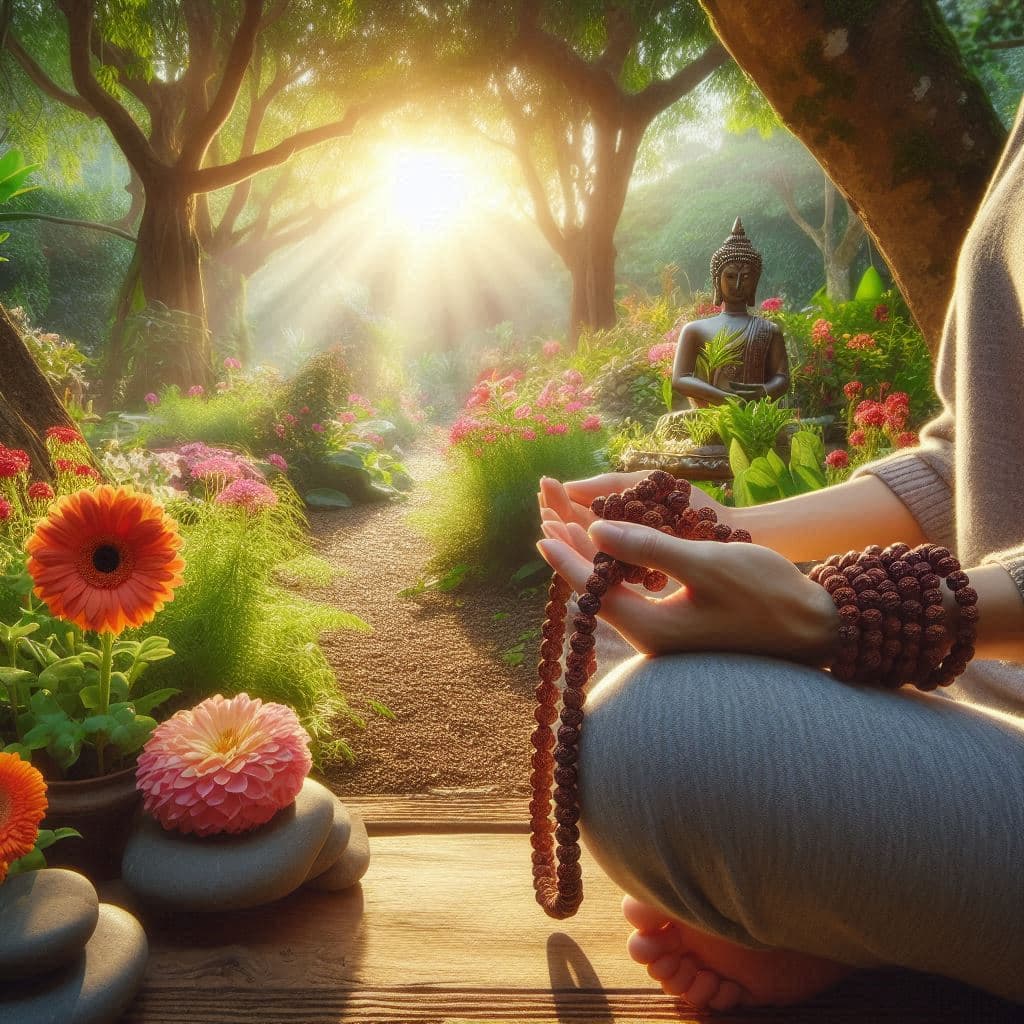
Meditation with Rudraksha: Ancient Wisdom for Modern Stress Relief
In today's fast-moving world, stress and anxiety have become daily companions for many. Work pressure, relationships, deadlines, and restless thoughts can clutter the mind and leave us feeling emotionally exhausted. Modern science now encourages meditation, mindfulness, and calming practices for better mental well-being but the answer to inner peace may lie in ancient spiritual tools that have been used for thousands of years.
One such tool is Rudraksha the sacred bead associated with Lord Shiva, revered by sages, yogis, and seekers for mental clarity and spiritual evolution. Meditation with Rudraksha combines ancient wisdom with modern stress-relief needs, offering a timeless method to soothe the mind, centre emotions, and deepen spiritual awareness.
What is Rudraksha?
Rudraksha beads are the dried seeds of the Elaeocarpus ganitrus tree, naturally found in the Himalayan regions of Nepal, India, and Indonesia. The word "Rudraksha" comes from Sanskrit: Rudra (a name for Lord Shiva) and Aksha (tears) rooted in the ancient legend that these beads were born from Shiva's tears of compassion during meditation.
Traditionally worn by saints, monks, and spiritual leaders, Rudraksha has long been associated with mental calm and stress reduction, enhanced focus and meditation depth, emotional balance and self-awareness, and a sacred connection to the divine and inner growth. Across centuries, it became more than ornamentation. Rudraksha became a companion in spiritual life and self-transformation.
How Rudraksha Helps Calm the Mind and Reduce Stress
- Calming the Nervous System: Rudraksha beads interact with the body's energy system, guiding mental vibrations toward a calmer state and reducing emotional tension. Many practitioners report a distinct feeling of relaxation, focus, and emotional steadiness that begins simply from holding the beads even before chanting starts.
- Balancing Emotions: Life events, daily challenges, and inner conflicts create emotional imbalance. Rudraksha is believed to assist in managing excessive anger, worry, and agitation, helping practitioners remain composed during stress rather than reacting from a place of emotion.
- Enhancing Meditation Focus: The tactile sensation of moving one bead at a time anchors the mind during meditation. This rhythmic movement reduces mental chatter and sustains concentration, making it far easier to enter deeper states of calm awareness states that typically take years of practice to access through other methods.
- Spiritual Connection and Inner Growth: Beyond stress relief, Rudraksha supports spiritual elevation. It is believed to connect the wearer with divine vibrations, aligning inner energy with a sense of purpose, insight, and clarity that extends well beyond the meditation session.
Ancient Indian Wisdom: How Sages Used Rudraksha
Rudraksha's role in spiritual practice goes back millennia. Ancient yogis in Himalayan ashrams engaged in long meditation sessions with Rudraksha malas not only for peace of mind but for deep inner awakening and the state known as Samadhi.
These spiritual masters saw Rudraksha as a bridge between the physical and the spiritual, using it to quiet the senses and sharpen inner perception. There are three stages on the way to Samadhi: Dharana (concentration on an object), Dhyana (uninterrupted flow of awareness toward that object), and Samadhi (the state where the meditator merges with the object of meditation). Rudraksha, particularly the 5 Mukhi and higher mukhis, was recognized as a powerful tool to support all three.
By focusing on each bead during meditation, the ancient sages cultivated mental discipline, emotional balance, and inner clarity traits equally relevant today for modern emotional well-being.
Meditation and Visualization with Rudraksha
One of the most powerful yet least discussed dimensions of Rudraksha practice is its use in visualization the art of holding a specific mental image during deep meditation to direct the mind toward a chosen field of consciousness.
In many Vedic texts, the object of Samyama (the combined practice of Dharana, Dhyana, and Samadhi) can be physical or subtle. When using Rudraksha during visualization, the bead becomes both an anchor for the physical senses (through touch and rhythm) and a bridge to the visualized reality held in the mind.
| Stage | Name | Description |
| Stage 1 | Dharana (Concentration) | Hold the mala and focus completely on a single object (a flame, deity, mantra, or quality). The 1 Mukhi and 5 Mukhi resist distraction. Move one bead per breath. |
| Stage 2 | Dhyana (Visualization) | The object becomes a living presence in awareness. The rhythm of the mala prevents sleep or restlessness, sustaining the inner vision. |
| Stage 3 | Samadhi (Merging) | The meditator, the act, and the object become one. The Rudraksha acts as a protective stabilizer, keeping the energy field clear of distraction. |
The Field of All Possibilities described in Vedic texts as the unified field from which all creation emerges — is the ultimate object of this merged state. Different mukhis correspond to different aspects of this field. The 5 Mukhi Rudraksha connects to Kalagni Rudra (the ground of transformation), while higher mukhis like the 11 or 14 Mukhi open channels of intuition and foresight that support visionary meditation.
How to Meditate with Rudraksha: Practical Methods
| Method | Focus | Practice Instructions |
| 1. Breath Awareness | Grounding & Presence | Sit comfortably with the mala in your right hand. Take slow, deep breaths. Exhale and move to the next bead. Focus entirely on the breath and tactile sensation. |
| 2. Mantra Meditation | Sound & Vibration | Choose a mantra (e.g., "Om Namah Shivaya" or a specific Beej Mantra). Chant once per bead, completing a full round of 108 beads to create a meditative flow. |
| 3. Chakra Alignment | Emotional Healing | Hold the mala close to your heart or Ajna chakra (between eyebrows). Visualize luminous energy expanding with each breath, supported by the bead's energy. |
Choosing the Right Rudraksha for Meditation
While all Rudraksha beads carry spiritual potential, choosing the right mukhi enhances your practice considerably.
- For Beginners: The 5 Mukhi Rudraksha is the most accessible widely recommended for mental clarity, emotional protection, and steady spiritual growth.
- For Advanced Practice: Those seeking deeper visualization and intuitive awareness often look to the 11 Mukhi (Lord Hanuman) and 14 Mukhi (Lord Shiva / Hanuman), which are revered in texts for supporting advanced meditative states.
Note: Always ensure the bead has clearly defined natural mukhi lines, comes from a trusted source with lab certification, and has not been artificially dyed or altered.
Integrating Rudraksha Meditation into Daily Life
You do not need long hours to benefit from this practice. Begin with 10-15 minutes daily and build gradually. Practice in the morning to set a calm tone for the day, during afternoon breaks for an emotional reset, or at night to unwind before sleep.
Consistency is far more powerful than intensity. Over weeks, you will notice reduced stress responses, improved emotional regulation, sharper focus, and a deepening sense of inner steadiness that begins to carry into daily life not just during formal practice.
Rudraksha does not promise an escape from the world. It offers something more valuable: the tools to face it from a place of calm.
Conclusion: Ancient Wisdom for Modern Peace
Meditation with Rudraksha is not a relic of the past it is a living practice, as relevant today as it was in the Himalayan ashrams of ancient India. Whether you seek relief from daily stress, emotional healing, deeper meditation, or the profound stillness described in the Vedic texts as Samadhi, Rudraksha offers a path that is both accessible and transformative.
Begin with one bead. One breath. One moment of true stillness. That is enough. The rest follows on its own.
🙏 हर हर महादेव 🙏
Frequently Asked Questions
What is Rudraksha and why is it used in meditation?
Rudraksha is a sacred seed from the Himalayan Elaeocarpus ganitrus tree, believed to carry spiritual and calming energies. It is used in meditation to enhance focus, reduce stress, and support deeper states of awareness including visualization and Samadhi.
How does Rudraksha help reduce stress and anxiety?
Holding or wearing Rudraksha during meditation calms the mind, stabilizes emotions, and supports the nervous system — reducing overthinking, restlessness, and anxiety through its natural bioelectrical properties combined with the grounding effect of rhythmic bead movement.
Which Rudraksha is best for meditation beginners?
The 5 Mukhi (five-faced) Rudraksha is widely recommended for beginners. It promotes mental clarity, emotional balance, and spiritual protection during meditation.
What is the difference between ordinary meditation and Rudraksha meditation?
Ordinary meditation relies on breath and mind alone. Rudraksha adds a third dimension touch and vibration that physically anchors awareness and amplifies the effect of every breath and mantra, making it significantly easier to reach deeper states.
Can Rudraksha support visualization practices?
Yes. The rhythmic movement of Rudraksha beads stabilizes the mind during visualization, preventing the two most common obstacles — distraction and drowsiness while the bead's energy field supports sustained inner focus.
How long before I notice results?
Many practitioners notice a shift in emotional tone within the first week. Deeper changes in focus, stress response, and inner clarity typically emerge within 3-4 weeks of consistent daily practice.