Shaligram Stone Price: Real Cost, Value Factors & Buying Guide
Shaligram Stone Price: Real Cost, Value Factors & Buying Guide
The price of an authentic Shaligram stone typically ranges from modest offerings covering ethical river retrieval to substantial values for rare avatar formations with visible internal chakras. In ancient Vedic traditions, sacred scriptures like the Padma Purana state that a Shaligram holds infinite spiritual worth and cannot strictly be assigned a commercial retail price. In modern practice, pricing represents the physical labor of high-altitude Himalayan sourcing, skilled grading, safe transit, and preservation.
Because genuine Shaligram stones originate exclusively from the remote, high-altitude Kali Gandaki riverbed in Nepal, scarcity and physical characteristics dictate value. Navigating the market requires understanding what influences genuine cost and how to avoid paying premium rates for mass-produced counterfeits.
What Determines the Price of an Authentic Shaligram?
Not all river stones carry equal rarity. Geological and morphological factors directly influence value:
1. Avatar Rarity and Scriptural Identification
Common rounded stones (Narayana or simple river nodules) are easier to discover during low-water seasons. In contrast, stones displaying distinct anatomical features representing specific avatars command higher value due to extreme rarity:
- Common Forms: Standard smooth stones or single-suture Shilas.
- Mid-Tier Forms: Clear Sudarshan chakras, balanced Matsya shapes, or dual-chakra Laxmi Narayan formations.
- Rare & Ultra-Rare Forms: Hayagriva (horse-head profile), Kurma (elevated tortoise carapace), open-aperture Narasimha, or complex Ananta/Shesha stones exhibiting dozens of internal spiral lines.
2. Sharpness of the Ammonite Sutures (Chakras)
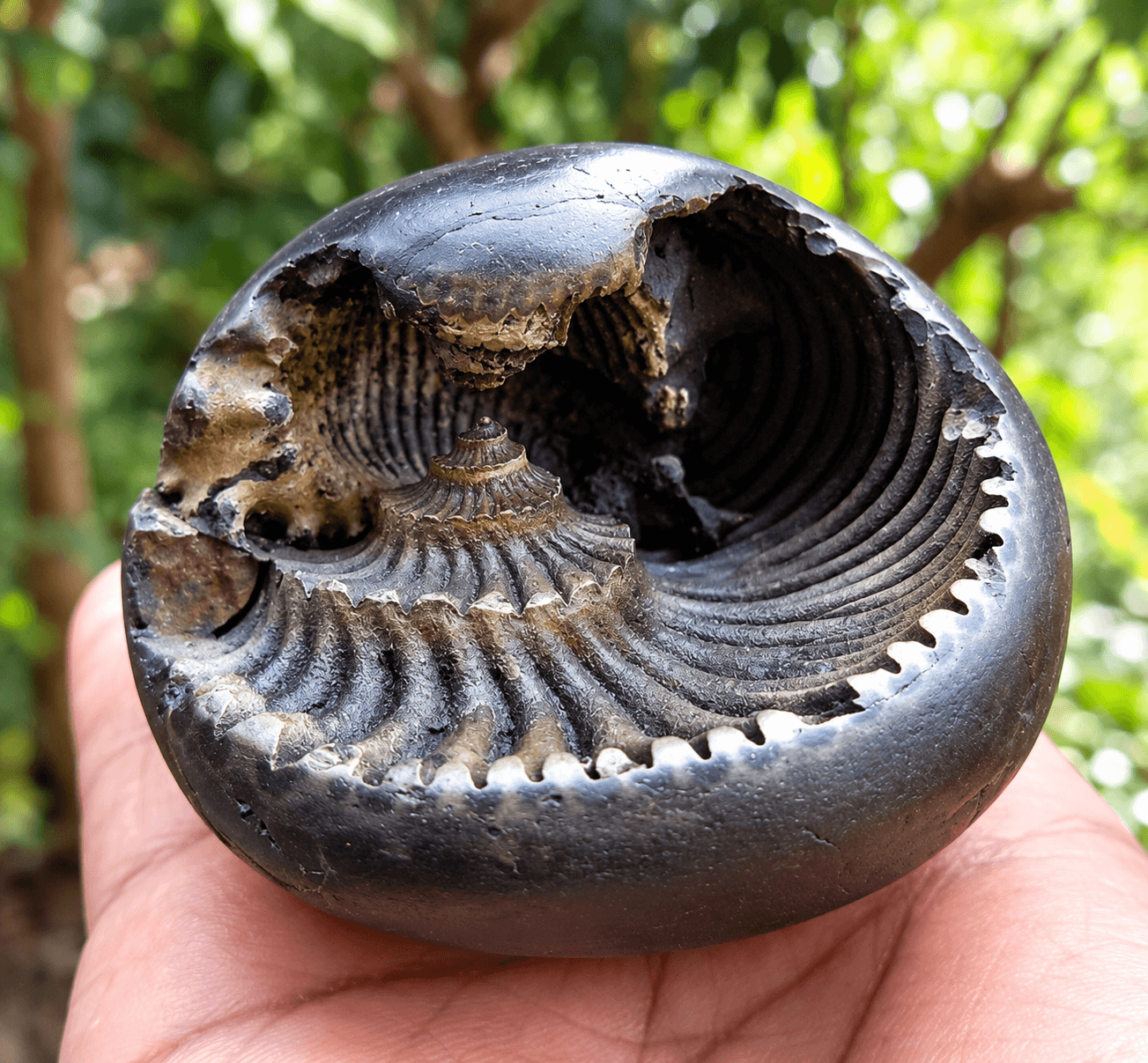
A genuine Shaligram is an ancient fossilized ammonite. Value increases when the fossil spiral whorls (Sudarshan Chakra) are:
- Crisply defined and deeply grooved rather than worn smooth.
- Naturally exposed on the exterior surface without artificial chiseling or acid etching.
- Free of synthetic polishing waxes, heavy dyes, or epoxy fillers.
3. Natural Aperture (Mukha) and Inner Anatomy
Shilas with a natural opening that reveals intact, preserved internal fossil chambers are significantly more difficult to find intact:
- Solid stones without openings are more common.
- Stones with a balanced, naturally formed Mukha that reveals untouched spiral ridges inside represent geological rarities, reflecting higher value.
4. Size and Weight Density
Authentic Kali Gandaki shale features a high iron and mineral density, making it feel surprisingly heavy for its volume. While miniature pocket Shilas are prized for personal travel, large, flawless stones suitable for temple altars require complex transport across mountainous terrain, increasing logistical expenses.
Realistic Price Overview (General Market Ranges)
While pricing varies by sourcing ethics and certification, authentic Kali Gandaki stones generally fall into these broad brackets:
| Shila Category | Defining Features | Market Price Expectation |
| Standard / Daily Puja Shila | Smooth, rounded black river stone with faint or single natural suture | Accessible / Affordable (Covers transport & basic sorting) |
| Identifiable Avatars | Distinct Laxmi Narayan, Matsya, or Sudarshan with clear outer chakras | Moderate / Mid-Range (Curated for defined chakra patterns) |
| Rare Avatar & Chamber Shilas | Intact Mukha, Narasimha teeth, Kurma shell, or multi-spiral Ananta | Premium (Collector & high-rarity spiritual specimens) |
| Factory Fakes & Casts | Perfectly uniform black, soft resin, molded cement, drilled artificial lines | "Cheap" bargains, yet spiritually and materially worthless |
Red Flags: How to Spot Overpriced or Fake Stones
The market contains counterfeit stones designed to deceive uninformed devotees. Watch for these deceptive pricing and selling practices:
- The "Too Good to Be True" Bargain: Extremely cheap, uniform black stones sold in bulk lots are often made from M-seal, black resin, or dyed river basalt from non-sacred rivers.
- Artificial Drilled Spirals Sold as "Rare": Unscrupulous sellers take ordinary grey shale, carve concentric circles with rotary tools, and paint them with black motor oil or lacquer, charging exorbitant fees for a fabricated avatar.
- Inflated Mysticism Claims: Avoid vendors who invent dramatic superstitious tales to justify absurd prices. True value is rooted in verified Kali Gandaki origin, natural fossil integrity, and ethical handling.
Essential Steps Before Buying an Original Shaligram
- Verify the River Origin: Ensure the stone is directly retrieved from the Kali Gandaki River region between Damodar Kunda and Muktinath/Jomsom in Nepal.
- Examine the Suture Lines: Look closely under good light or magnification. Natural ammonite sutures show organic fractal complexity; machine carvings show uniform, repetitive groove depths.
- Check for Inherent Imperfections: True river stones have organic asymmetries, tiny natural pits, and subtle mineral variations. Complete mechanical perfection is a sign of industrial casting.
- Insist on Authenticity Backing: Source your stone from transparent providers who stand behind their sourcing with verifiable guarantees.
Ethical Sourcing with Gemshakti
Because a Shaligram is a sacred focal point of life-long home worship, genuine value lies in authenticity, uncompromised natural form, and reverent handling from riverbed to altar.
At Gemshakti, every Shila is ethically hand-gathered directly from Nepal’s Kali Gandaki riverbed, left uncarved in its natural state, and protected by our Two-Times Money-Back Authenticity Guarantee.
Explore our fairly priced, verified Authentic Kali Gandaki Shaligram Collection or select a sacred Laxmi Narayan Shaligram to invite lasting prosperity into your home.