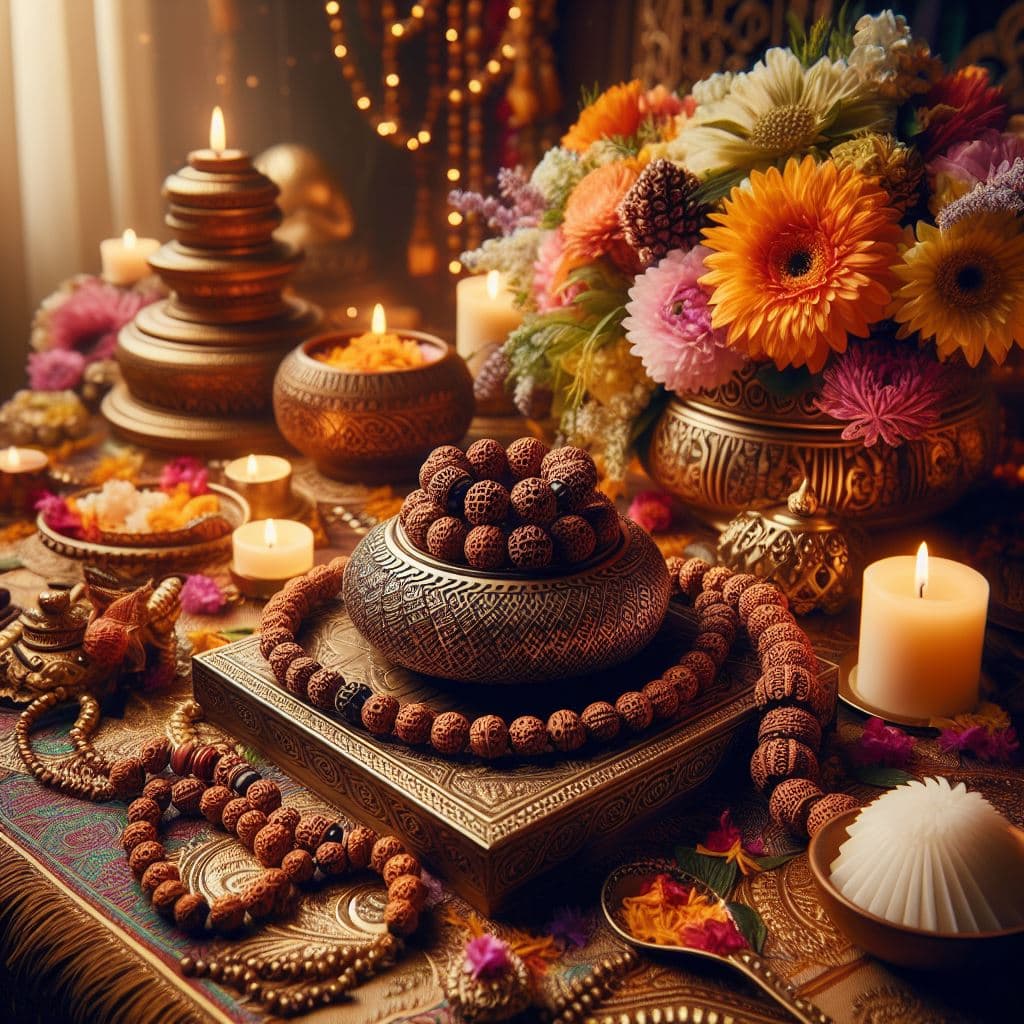
The Pran Pratishta Pooja
Rudraksha beads have held a profound place in our spiritual traditions since ancient times, carrying deep meaning for those who use them in prayer and meditation. However, to fully harness their sacred potential, one must perform the crucial ritual of Prana Pratishtha Pooja. This ancient Vedic ceremony energizes the Rudraksha with prana (life-force energy) through ritual purification and invocation, similar to the practices used for murtis and temples.
What is the Prana Pratishtha Pooja?
"Prana" or "Pran Pratistha Pooja" is a powerful Vedic ritual that breathes life into the Rudraksha, awakening the divine energy dormant within the seed. It transforms the bead from a simple physical object into a living embodiment of spiritual energy. By chanting specific mantras, devotees create sacred vibrations that resonate with cosmic energy, establishing a direct connection between the wearer and divine forces.
Think of a new Rudraksha as a dormant seed; the Pran Pratistha Pooja is the water and sunlight that helps it sprout into a potent spiritual tool. Wearing a properly energized Rudraksha offers profound benefits, including enhanced concentration during meditation, a greater sense of daily calmness, and strong protection against negative energies.
Preparation for the Pooja
Proper preparation is essential before beginning the ritual.
- Gather necessary items: meticulously selected Rudraksha beads, clean water, incense, flowers, and offerings such as fruits or sweets.
- Prepare a clean, quiet space free from disturbances.
- Select an auspicious time, such as Mondays (sacred to Lord Shiva), or consult a Vedic astrologer for the best timing.
Step-by-Step Pooja Procedure
The ceremony begins with a purification process, cleansing the beads with water (often Ganga Jal) to symbolize the washing away of impurities. The steps that follow include:
- Sankalpa Pooja: Making a formal declaration of intent and purpose before the ritual begins, acting as a vital promise to oneself and the presiding deity.
- Swasti Vachan: Reciting a sacred mantra dedicated to Lord Ganesha, Goddess Saraswati, and other deities to invoke blessings and ensure the ceremony's success.
- Arghya: Offering Jal (water often mixed with sandalwood and flowers) to symbolize respect, devotion, and a connection to divine energy.
- Diyo Kalash Ganesh Pooja: Filling a Kalash (pot) with water and placing an idol of Lord Ganesha to seek blessings for wealth, prosperity, and good fortune.
- Shiva Pooja: A special ritual to honor Lord Shiva for inner peace and spiritual growth. This involves Jalabhishek (pouring water over the idol), making offerings (milk, flowers, Dhatura, leaves, betel nut, panchamrit), offering sixteen makeup items to Goddess Parvati, lighting lamps, chanting Shiva Mantras, and concluding with the Shiva Chalisa and Aarti.
- Rudrabhishek Pooja: Worshipping Lord Shiva in His Rudra form by offering a mixture of Ganga water, hemp, milk, and sugarcane juice while chanting "Om Namah Shivaya".
- Shiva Shringar: Adorning Shiva with nine dedicated items (including a Damru, Trishul, and Moon). The pooja officially concludes with a final prayer and the application of a sacred tilak mark on the Rudraksha, signifying it is fully energized and ready to wear.
When to Perform Prana Pratishtha?
This initial ritual is crucial when you first receive a new Rudraksha bead. It is also highly beneficial to perform it during special occasions like Maha Shivaratri or the beginning of an important spiritual journey.
If you feel your Rudraksha's energy has diminished over time, the pooja can be repeated annually or on significant spiritual days to rejuvenate the bead's potency and keep it aligned with your spiritual intentions.