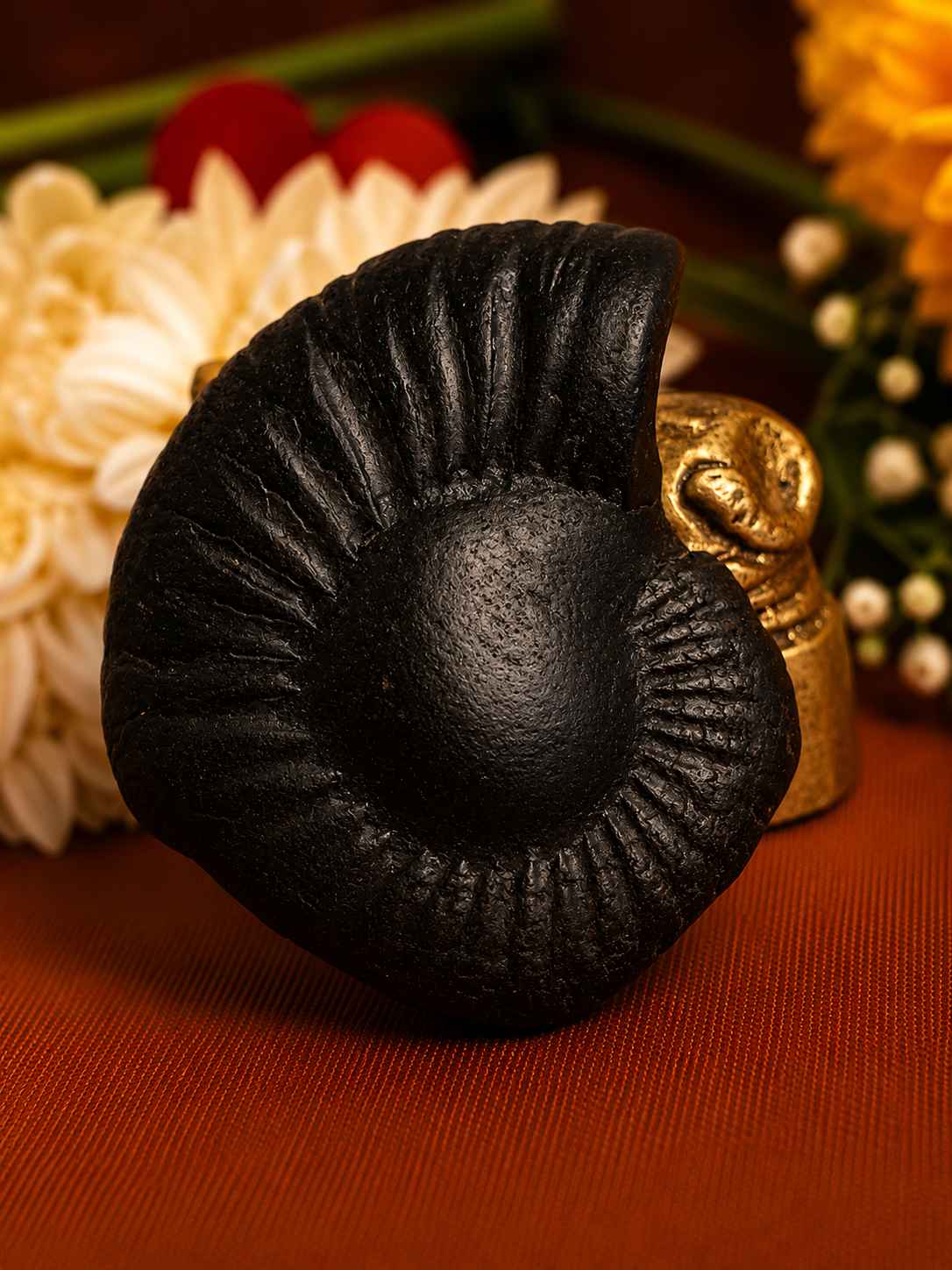
Types of Shaligram Stones: Identifying Names, Avatars & Chakras
Types of Shaligram Stones: Identifying Names, Avatars & Chakras
Every authentic Shaligram stone represents a distinct manifestation (Swaroop) of Lord Vishnu, identified by its natural spiral chakra patterns, color shades, and organic openings (Mukha). Sourced exclusively from the Kali Gandaki River in Nepal, these sacred ammonite fossils formed over millions of years, carrying distinctive natural markings that ancient texts classify into specific divine avatars.
According to classical scriptures like the Padma Purana, Garuda Purana, and the Praanatoshan Tantra, identifying the correct form helps devotees select a stone aligned with their spiritual aspirations, family harmony, or material needs.
How Shaligram Types Are Classified
Ancient Vedic texts classify a Shaligram based on distinct geological and structural markers:
- Number of Chakras: The visible ammonite spirals on the surface or inside the natural cavity.
- Shape and Hue: Ranging from deep charcoal black (Krishna) to subtle blue-tinted, golden-tinged, or yellowish hues.
- The Mukha (Opening): The position, depth, and angle of the natural chamber opening.
- Surface Markings: Fine circular fossil lines, teeth-like inner sutures (Vanmala), or natural depressions representing divine weapons like the mace (Gada) or bow (Sharanga).
Most Revered Types of Shaligrams and Their Significance
1. Laxmi Narayan Shaligram
- Key Identifiers: Features two visible chakras resting side-by-side on the surface or nested inside a single wide aperture.
- Color & Texture: Smooth, rounded, river-polished black finish.
- Significance: Represents the supreme divine pair—Lord Vishnu and Goddess Mahalakshmi. It is the most auspicious Shila for family homes, bringing sustained wealth, peace, business growth, and marital unity.
2. Sudarshan Shaligram
- Key Identifiers: Displays a sharp, prominent, circular spiral chakra on its front face resembling the rotating cosmic discus (Chakra) of Lord Vishnu.
- Significance: Serves as a spiritual shield. It eliminates negative energies, counters malefic planetary influences, and protects the household from jealousy and sudden obstacles.
3. Narasimha Shaligram
- Key Identifiers: Characterized by a prominent natural opening (Mukha) often displaying jagged inner chamber ridges that resemble teeth, alongside two prominent internal chakras.
- Significance: The fierce protector avatar. It dissolves deep-seated fear, provides relief in legal or business disputes, and instills self-confidence and moral strength.
4. Matsya Shaligram
- Key Identifiers: Naturally elongated, fish-like body shape with a tapered front, possessing fine spiral lines at the head or side.
- Significance: The first incarnation of Vishnu. Bestows wisdom, intellectual clarity, clarity of speech, and spiritual awakening for students and scholars.
5. Kurma Shaligram
- Key Identifiers: Oval or dome-shaped, resembling the shell of a tortoise, with a flat bottom and convex top.
- Significance: The second incarnation that supported Mount Mandara. Bestows steadfast patience, real estate stability, mental resilience, and grounding during chaotic life phases.
6. Hayagriva Shaligram
- Key Identifiers: Distinct horse-head-shaped profile or a pointed arch with clear internal chakra whorls.
- Significance: The god of knowledge and esoteric wisdom. Ideal for educators, researchers, and serious spiritual practitioners seeking higher learning.
7. Ananta / Shesha Shaligram
- Key Identifiers: A multi-layered formation displaying numerous small chakras (usually fourteen or more) or circular lines resembling the hooded coils of the cosmic serpent Sheshanaga.
- Significance: Bestows profound peace of mind, aids deep meditation, and grants long-term lineage prosperity.

Chakra Count Quick-Reference Guide
Vedic authorities often categorize the stones by the number of spiral sutures:
| Visible Chakras | Traditional Associated Name | Primary Spiritual Energy |
| 1 Chakra | Sudarshan | Ultimate protection and focus |
| 2 Chakras | Laxmi Narayan / Janardana | Wealth, marital harmony, balance |
| 3 Chakras | Vamana / Trivikrama | Humility, removal of pride, growth |
| 4 Chakras | Chaturbhuja / Vasudeva | Completion of the 4 life goals (Purusharthas) |
| Many (7+) | Ananta / Vishwaroopa | Infinite peace, cosmic connection, Moksha |
Beware of Artificial Carvings Sold as Rare Types
Because rare avatars (such as Hayagriva or Kurma) command immense reverence, fraudulent sellers frequently carve common river shale or machine-drill artificial spirals into smooth rocks to mimic rare forms.
- A true Shaligram's spirals are geological fossil sutures, never straight, machine-cut, or perfectly symmetrical grooves.
- Every authentic variety originates exclusively from the Kali Gandaki River beds in Nepal.
Connect with an Authentic Shila
Every Shaligram chosen with genuine intent brings peace to the household. Discover verified, naturally formed river stones directly from Muktinath in our Authentic Shaligram Collection, or welcome auspicious harmony with a natural Laxmi Narayan Shaligram.